You’ve spent hours crafting LinkedIn posts, but your engagement is flat, and your pipeline is empty. You’re not alone—most B2B marketers and sales professionals struggle to cut through the noise on LinkedIn. The problem? You’re either posting too salesy (and scaring prospects away) or too generic (and blending into the feed). The solution isn’t more content; it’s smarter content. At Mauveverse.com, we’ve helped hundreds of clients attract high-ticket prospects by aligning their LinkedIn content with how decision-makers actually consume information in 2026. Here’s how to do it.
—
Why Traditional LinkedIn Prospecting Methods Fail
Most LinkedIn content strategies follow one of two flawed approaches: the “spray-and-pray” method (posting anything and hoping it sticks) or the “hard sell” method (pushing product features before building trust). Neither works in 2026. Here’s why:
- Algorithm Overload: LinkedIn’s algorithm now prioritizes meaningful engagement over sheer volume. Posts with 50+ comments outperform those with 500+ likes because the platform rewards conversations, not vanity metrics.
- Decision-Maker Fatigue: C-suite prospects scroll past 90% of content. They don’t have time for vague thought leadership—they want specific insights that solve their immediate problems.
- The “Salesy” Stigma: A 2025 HubSpot study found that 72% of B2B buyers ignore LinkedIn posts that feel like ads. Prospects tune out the moment they sense a pitch.
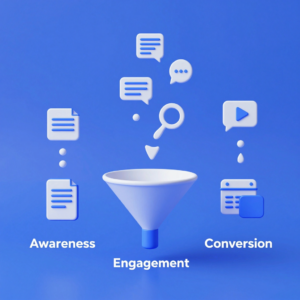
The fix? A funnel-first approach. Instead of blasting your audience with one-off posts, you need a system that nurtures prospects from awareness to conversion. That’s where the three-part LinkedIn content funnel comes in.
—
Key Features of a High-Converting LinkedIn Content Strategy
To attract your ideal prospects, your LinkedIn content must do three things: educate, engage, and convert. Here’s how to structure it:
1. The Three-Part Content Funnel
- Top of Funnel (TOFU): Awareness – Posts that attract cold audiences by addressing their pain points.
- Middle of Funnel (MOFU): Consideration – Content that positions you as the solution without being pushy.
- Bottom of Funnel (BOFU): Conversion – Posts that drive action (e.g., DMs, calls, or sign-ups).
2. The 60/30/10 Posting Ratio
- 60% TOFU: Educational, value-driven content (e.g., industry trends, how-to guides).
- 30% MOFU: Social proof and case studies (e.g., client wins, testimonials).
- 10% BOFU: Direct calls-to-action (e.g., “DM me if you’re struggling with X”).
3. Post Formats That Convert in 2026
Not all LinkedIn posts are created equal. Here are the formats that drive the most engagement and leads:
- Problem-Agitate-Solve (PAS): Start with a pain point, agitate it, then offer a solution.
Example: “Struggling to get replies on LinkedIn? Most people make this one mistake…”
- Mini Case Studies: Share a quick win with metrics (e.g., “How we helped [Client] 3X their pipeline in 30 days”).
- Polls and Questions: Boost engagement by asking your audience to weigh in (e.g., “What’s your biggest LinkedIn prospecting challenge?”).
- Carousels: Visual storytelling works—use slides to break down complex topics.
- Short-Form Video: LinkedIn’s algorithm favors native video. Keep it under 60 seconds.
—
Real-World Impact: How to Structure LinkedIn Content for Prospecting in 2026
Let’s break down how to apply this framework with real examples.
Step 1: Define Your Prospect’s Pain Points
Your content must speak directly to your ideal client’s frustrations. For example:
- If you sell sales software, target pain points like “low response rates” or “inefficient outreach.”
- If you’re a consultant, focus on “lack of clarity in strategy” or “wasted ad spend.”
Step 2: Map Content to the Funnel
Here’s how to align post formats with each funnel stage:
| Funnel Stage | Post Format | Example |
|——————|——————————-|—————————————————————————–|
| TOFU | Industry Trends | “3 LinkedIn Prospecting Trends You Can’t Ignore in 2026” |
| TOFU | How-To Guides | “How to Write LinkedIn Posts That Get 100+ Comments” |
| MOFU | Mini Case Studies | “How [Client] Landed 5 Meetings in a Week Using This LinkedIn Script” |
| MOFU | Social Proof | “Here’s What Happened When We Tested LinkedIn’s New Algorithm Update” |
| BOFU | Direct CTAs | “DM me ‘PIPELINE’ if you want a free audit of your LinkedIn outreach” |
Step 3: Optimize for Engagement
- Hook in the First 3 Lines: Your post’s first sentence must stop the scroll. Use curiosity, controversy, or a bold statement.
- Use Emojis Sparingly: 1–2 emojis per post max. Overuse looks unprofessional.
- End with a Question: Encourage comments by asking, “What’s your take?” or “Has this worked for you?”
Step 4: Track and Iterate
Use LinkedIn’s native analytics to see which posts drive the most profile visits, DMs, and conversions. Double down on what works.
—
Expert Tips: Common LinkedIn Prospecting Mistakes to Avoid
Even the best strategies fail if you make these errors:
- Over-Promoting: If 80% of your posts are about your product, prospects will tune out. Stick to the 60/30/10 rule.
- Ignoring the Algorithm: LinkedIn rewards early engagement. Post when your audience is active (typically 8–10 AM or 12–2 PM in their time zone).
- Being Too Vague: Generic advice like “Be authentic” doesn’t convert. Be specific—share exact scripts, templates, or data.
- Neglecting DMs: Engagement doesn’t end with likes. Reply to every comment and follow up with prospects who engage.
—
Frequently Asked Questions
What is the best LinkedIn content strategy to attract B2B prospects in 2026?
The best strategy is a funnel-first approach: 60% educational content (TOFU), 30% social proof (MOFU), and 10% direct CTAs (BOFU). Focus on post formats like PAS, mini case studies, and polls to drive engagement. For a deeper dive, check out Mauveverse.com for templates and scripts.
How do I create LinkedIn posts that convert leads without being salesy?
Avoid pitching in every post. Instead, use the Problem-Agitate-Solve framework. Start with a pain point (e.g., “Struggling to get replies?”), agitate it (e.g., “Most people waste time on the wrong outreach”), then offer a solution (e.g., “Here’s the script we use to get 30%+ response rates”).
What are the top LinkedIn post formats for generating high-quality leads?
The top formats in 2026 are:
- PAS Posts (Problem-Agitate-Solve)
- Mini Case Studies (with metrics)
- Polls and Questions (to boost engagement)
- Carousels (for visual storytelling)
- Short-Form Video (under 60 seconds)
—
Conclusion
LinkedIn prospecting in 2026 isn’t about posting more—it’s about posting smarter. By using a three-part content funnel, sticking to the 60/30/10 ratio, and leveraging high-converting post formats, you’ll attract the right prospects without being salesy. Remember: decision-makers don’t want more content; they want better content. Start implementing these strategies today, and watch your pipeline grow. For ready-to-use templates and scripts, visit Mauveverse.com.
Want us to build this for you?
Our team ships this kind of work every week for clients across the country.
Talk to our team